Jessica Rosenfeld

Jessica Rosenfeld

Jessica Rosenfeld

Professor of English
PhD, University of Pennsylvania
research interests:
  • Medieval literature, Ethics
  • History of Emotions
  • Medieval Women’s Writing
  • Psychoanalytic Theory
  • Gender and Sexuality Studies
View All People

contact info:

mailing address:

  • Washington University
    CB 1122
    One Brookings Drive
    St. Louis, MO 63130-4899

Jessica Rosenfeld specializes in late medieval literature, the medieval reception of Aristotle (ethics and politics), medieval women’s writing, and the history of emotions.

Rosenfeld’s first book, Ethics and Enjoyment in Late Medieval PoetryLove after Aristotle (Cambridge University Press, 2011) explores the influence of Aristotelian ethics on the way medieval philosophers and poets wrote about love, pleasure, labor, and human happiness.  The book also considers the legacy of “courtly love” in the psychoanalytic ethics of Jacques Lacan.  Her forthcoming book, Foundations of Feeling: Theorizing Emotions in Late Medieval Literature examines the medieval foundations of modern ideas about emotions and affect – including debates about whether emotions are primarily bodily or primarily cognitive, the status of “natural” emotions, the gendering of emotion, and emotional taxonomies.  She has published articles on Chaucer, John Gower, Margery Kempe, and The Romance of the Rose in journals including New Medieval Literatures, JMEMS, Exemplaria, and New Chaucer Studies: Pedagogy and Profession, and in several edited collections.  She co-edited a collection of essays, Chaucer and the Subversion of Form (Cambridge University Press, 2018), served as co-editor of the journal Exemplaria: Medieval – Early Modern – Theory (2019-2023), and Associate Editor of The Chaucer Encyclopedia (Wiley-Blackwell, 2023).  She recently published an essay on psychoanalysis and medieval transgender studies in the centennial issue of Speculum: A Journal of Medieval Studies and co-edited a colloquium on the same topic in Studies in the Age of Chaucer. She is currently working on a project studying medieval stories about the origin of politics and the relationship between politics and nature. In 2014-15, she held a Charles A. Ryskamp Research Fellowship from the ACLS. 

Professor Rosenfeld has recently taught undergraduate and graduate courses on Medieval Women’s Writing, Chaucer, Medieval Emotions, Medieval Gender and Sexuality, Medieval Literature and the Art of Love, and the Medieval Dream Vision.

Rosenfeld is an affiliate faculty member of the Departments of Women, Gender, and Sexuality Studies, Comparative Literature and Thought, and Classics.

Courses

  • L14 158: Literature Seminar for Freshmen: Literature and the Art of Love
  • L14 491: Chaucer
  • L14 2151: Literature in English: Early Texts and Contexts
  • L14 3121: The Medieval Romance and Arthurian Legend
  • L14 410:: Medieval English Literature: Medieval Dream Visions
  • L93: 201C: Classical to Renaissance Literature: Text and Tradition
  • L14 369: Reading Sex in Premodern England
  • L14 4101: Medieval Women's Writing
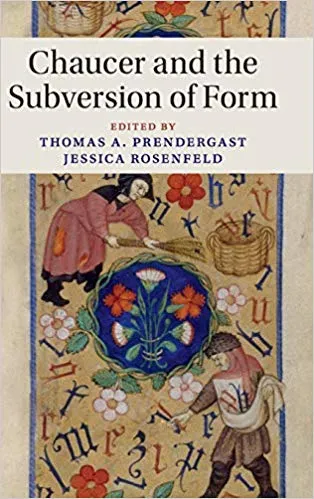
Chaucer and the Subversion of Form

Chaucer and the Subversion of Form

Responding to the lively resurgence of literary formalism, this volume delivers a timely and fresh exploration of the works of Geoffrey Chaucer. Advancing 'new formalist' approaches, medieval scholars have begun to ask what happens when structure fails to yield meaning, probing the very limits of poetic organization. While Chaucer is acknowledged as a master of form, his work also foregrounds troubling questions about formal agency: the disparate forces of narrative and poetic practice, readerly reception, intertextuality, genre, scribal attention, patronage, and historical change. This definitive collection of essays offers diverse perspectives on Chaucer and a varied analysis of these problems, asking what happens when form is resisted by author or reader, when it fails by accident or by design, and how it can be misleading, errant, or even dangerous.

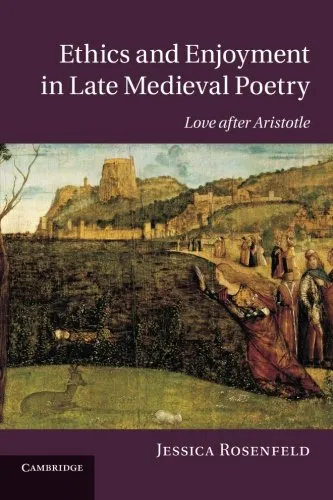
Ethics and Enjoyment in Late Medieval Poetry: Love after Aristotle

Ethics and Enjoyment in Late Medieval Poetry: Love after Aristotle

Jessica Rosenfeld provides a history of the ethics of medieval vernacular love poetry by tracing its engagement with the late medieval reception of Aristotle. Beginning with a history of the idea of enjoyment from Plato to Peter Abelard and the troubadours, the book then presents a literary and philosophical history of the medieval ethics of love, centered on the legacy of the Roman de la Rose. The chapters reveal that 'courtly love' was scarcely confined to what is often characterized as an ethic of sacrifice and deferral, but also engaged with Aristotelian ideas about pleasure and earthly happiness. Readings of Machaut, Froissart, Chaucer, Dante, Deguileville and Langland show that poets were often markedly aware of the overlapping ethical languages of philosophy and erotic poetry. The study's conclusion places medieval poetry and philosophy in the context of psychoanalytic ethics, and argues for a re-evaluation of Lacan's ideas about courtly love.